


Structural unemployment happens when available workers no longer match the skills, locations, or qualifications employers need. The economy may still have many open positions. Yet displaced workers can remain jobless because those openings require different capabilities or exist elsewhere.
Direct answer: Structural unemployment is long-lasting joblessness caused by a mismatch between workers and available jobs. Technology, automation, industry shifts, trade, and changing consumer demand can create that mismatch. Reducing it usually requires retraining, new credentials, better job matching, relocation support, or time for workers and employers to adjust.
| Key point | What it means in the U.S. |
|---|---|
| Main cause | Worker skills or locations do not match available positions. |
| Common triggers | Automation, AI, industry decline, trade, relocation, changing demand |
| Typical duration | Often longer than ordinary job-search periods |
| Business impact | Some employers struggle to hire while displaced workers remain available. |
| Worker response | Retraining, certification, relocation, or switching industries |
| Policy response | Workforce training, career services, apprenticeships, and transition assistance |
Key Takeaways
- The problem is a mismatch, not simply a shortage of jobs.
- New technology can eliminate some tasks while creating demand for different skills.
- Some occupations are growing while others are declining.
- Retraining works best when it connects workers with clear employer demand.
- Employers can reduce hiring gaps by reviewing requirements and investing in training.
What Causes Structural Unemployment?
Several forces can change what American employers need faster than workers can adapt. Technology is one major cause because software and machines can replace repetitive tasks. Workers may then need new technical, analytical, or customer-facing skills. Industry changes can create the same problem without eliminating total employment. A factory closure may reduce local production jobs while healthcare positions grow nearby.
Those workers cannot always move directly into nursing, medical support, or technical roles. Geography can also create a mismatch between labor supply and demand. Jobs may expand in one state while experienced workers remain elsewhere. Housing costs, family obligations, and moving expenses can make relocation difficult.
Global trade and changing consumer preferences can reshape employment patterns too. Customers may buy different products or use different delivery channels. Companies then change staffing as revenue shifts between industries and business models.
Why Technology and AI Matter for U.S. Workers
Current federal projections show why job-market change does not affect every occupation equally. The Bureau of Labor Statistics expects total employment to rise 3.1% from 2024 through 2034. That represents about 5.2 million additional jobs across the economy. Yet several occupational groups are projected to shrink during that same period. Office and administrative support employment is projected to fall by about 761,900 jobs.
Sales and production occupations are also expected to decline overall. Meanwhile, demand is growing rapidly in several technology-related occupations. BLS projects data scientist employment to grow 33.5% between 2024 and 2034. Information security analysts are projected to grow 28.5%. These changes illustrate the central problem better than a simple automation narrative. Technology does not necessarily remove work from the entire economy.
It can shift demand toward different tasks, education levels, and occupational skills. For employers adapting their operations, Businessstry’s business management coverage provides related guidance on operating changes. Smaller firms can also review the site’s small-business resources when planning workforce decisions. These resources can help owners connect labor changes with broader business planning.
A Simple U.S. Example
Imagine a regional company that employs 300 workers processing routine customer records. New software reduces the need for most manual data entry. The company still needs cybersecurity specialists, systems analysts, and customer-support staff. The displaced employees may have years of valuable workplace experience. Yet they may lack the credentials needed for the newly created roles. Open positions and available workers therefore exist at the same time.
This example shows why the problem can persist during economic growth. More consumer spending alone will not teach a displaced worker cybersecurity. The worker needs a realistic path toward skills that employers currently value.
Structural Unemployment vs. Cyclical and Frictional Joblessness
Economists separate different types of joblessness because their causes require different responses. Structural problems concern mismatches between workers and available roles. Cyclical problems result mainly from weak demand during economic downturns.
| Type | Main cause | Typical situation | Common response |
|---|---|---|---|
| Structural | Skills, location, or industry mismatch | Jobs exist, but workers do not fit them. | Training, relocation, credential changes |
| Cyclical | Weak economy and reduced spending | Businesses cut jobs during downturns. | Economic recovery and stronger demand |
| Frictional | Normal job searching | A worker moves between suitable positions. | Better matching and search time |
Frictional joblessness is usually part of normal labor market movement. A qualified accountant changing employers may spend several weeks between suitable jobs. No major retraining is required. Cyclical job losses work differently because businesses need fewer workers during weak economic periods. When demand returns, many former positions may return too. Structural changes can permanently alter which occupations employers require.
Does the Current U.S. Jobless Rate Measure This Problem?
The national headline rate doesn’t tell economists how much joblessness stems from structural causes. In September 2026, the U.S. unemployment rate was 4.2%, according to the BLS. The statistic measures people without work who meet official job-search criteria. It does not automatically identify why each person is unemployed. A worker may be between jobs, affected by weak demand, or facing obsolete skills.
Researchers need additional labor-market evidence to distinguish those causes. That distinction matters for business owners reading monthly employment reports. A moderate national rate can coexist with severe hiring shortages in certain occupations. It can also coexist with workers displaced from declining fields.
How Businesses Can Respond to Skills Mismatches
Employers should first separate genuine skill requirements from unnecessary hiring filters. Some vacancies remain difficult to fill because job descriptions demand credentials beyond the work itself. Reviewing those requirements can broaden the pool of qualified candidates. Training existing workers can also be cheaper than competing repeatedly for scarce outside talent.
Employers can identify adjacent skills and teach specific tools after hiring. Apprenticeships and structured onboarding can support this approach. Businessstry’s U.S. job application template guide can help smaller employers organize candidate screening. A consistent process makes relevant skills easier to compare across applicants. Employers should still tailor requirements to each role.
Some companies can also redesign work rather than immediately replacing every departing employee. Businessstry explains several approaches in its guide to scaling administrative functions without hiring. That perspective can help owners decide which capabilities belong inside the company.
How Workers Can Adapt
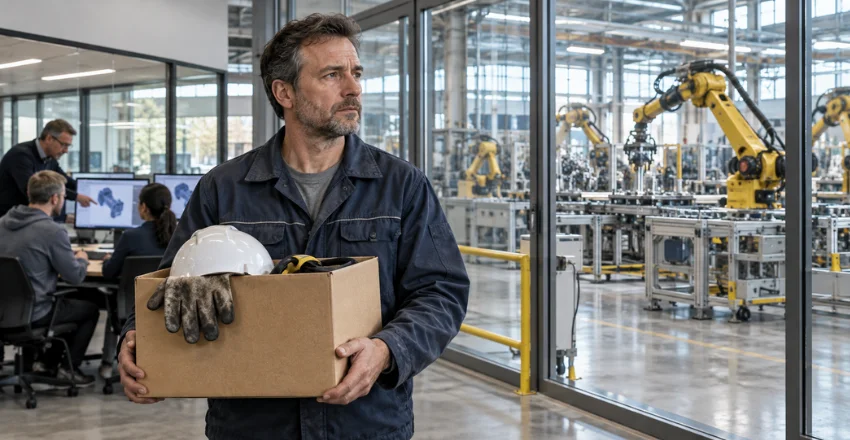
Workers facing lasting industry change should begin by identifying nearby occupations with transferable skills. A production supervisor may already understand scheduling, safety, quality control, and team leadership. Those abilities can transfer even when the original industry contracts. The next step is identifying the smallest realistic skills gap. A short certificate may sometimes provide more value than starting an unrelated degree. Training should connect directly with employers that are hiring.
The U.S. Department of Labor supports eligible displaced workers through employment and training programs. American Job Centers can provide job-search assistance, training information, and other services. Availability and eligibility can differ by location. Workers should also compare local demand before paying for training. A credential has limited value when few nearby employers need it. Job postings, career centers, and occupational projections can help confirm demand first.
What Policies Can Reduce Long-Term Skills Mismatches?
Effective programs connect education with specific labor-market needs rather than offering training without clear destinations. Community colleges, employers, unions, and workforce agencies can coordinate around occupations with persistent openings. That approach can shorten the distance between training and employment.
Relocation assistance can help when skills remain valuable, but jobs have moved. Transportation and childcare support can matter for similar reasons. A worker cannot accept a suitable opportunity that remains practically inaccessible. Public policy can also improve information about changing occupations. Reliable projections help schools, businesses, and workers make better decisions before shortages become severe. Early adjustment is usually easier than retraining after a large displacement.
Why Structural Change Matters to Business Owners
Labor-market shifts affect more than workers who lose jobs. Employers can face slower hiring, wage pressure, delayed projects, and higher training costs. Those effects influence expansion plans and operating decisions. Business owners should track which tasks technology changes rather than focusing only on entire job titles. A position can survive even as many of its duties change. Hiring plans should reflect the new mix of human and technical skills.
The practical lesson is to plan workforce transitions before shortages become urgent. Review future skill needs alongside technology investments and expansion plans. That reduces the risk of buying new systems without preparing employees to use them.
Frequently Asked Questions
What is an example of structural unemployment?
A warehouse introduces automation and needs fewer manual inventory workers afterward. It then hires technicians who can maintain automated equipment. Displaced employees without those technical skills may remain jobless until they retrain.
Is this type of joblessness permanent?
It can last a long time, but it is not necessarily permanent for an individual worker. Training, relocation, or occupational changes can restore a match. Economic development can also create new opportunities in affected communities.
Can artificial intelligence cause long-term job displacement?
AI can reduce demand for specific tasks while increasing demand for others. BLS expects AI to influence several office, media, legal, and technology occupations. The final employment effect differs by occupation and industry.
Why does retraining help?
Retraining closes the gap between existing worker capabilities and employer requirements. It works best when programs teach skills linked to real vacancies. Training without employer demand can leave the original mismatch unresolved.
Can businesses experience worker shortages while people remain unemployed?
Yes, because the unemployed workers may not match the available positions. Differences can involve skills, credentials, schedules, or location. That situation is one reason headline labor statistics need careful interpretation.
The Bottom Line for the U.S. Labor Market
Structural change is a normal feature of a growing and evolving economy. The challenge appears when occupations change faster than people can retrain or relocate. Businesses, workers, and public agencies all influence how painful that transition becomes. The strongest response combines realistic hiring standards, targeted training, and better information about employer demand.
Workers need clear routes to growing occupations. Employers need workforce plans that anticipate changing skills before vacancies become critical. For more practical guidance on employment, operations, and growth, explore Businessstry’s small-business coverage. Use economic projections as planning tools rather than predictions for individual careers. Local demand, experience, education, and industry conditions still shape each outcome.