

First-time PCP buyers often ask the wrong question. They compare rifle prices and forget the support gear: pump or tank, scope, mounts, pellets, cleaning supplies, and maybe a chronograph. A $250 rifle can become a $500 project before the first shot. Budget PCP brands that understand this are more useful than ones that win the spec-sheet war. Pinty Devices is interesting because its lineup is built around the total cost of entry, not just the headline price.
There is no universal number. A first PCP for backyard plinking and pest control can be served well by a rifle in the 250–400 range if it has a good barrel, a usable trigger, and consistent velocity. A first PCP for field target or long-range hunting needs more. The mistake is buying the cheapest possible gun and then spending twice as much on upgrades. Pinty’s approach seems to be: offer several price points, but keep the core function—regulator, barrel, trigger—good enough that buyers do not immediately need to replace the gun.
One useful way to compare is to look at generations. A brand that iterates a platform usually fixes small problems without raising the price much. That is why pages like Pinty’s PCP new generations matter. They show whether a company is moving forward or just renaming old stock. For first-time buyers, a current-generation budget rifle is often better than a discounted older flagship, because the newer gun may have better seals, a better fill port, and better trigger geometry.
Pistols are also worth considering. If the first PCP is mainly for plinking in the garage or a small backyard, a PCP pistol can deliver most of the fun at a lower cost and with lower air consumption. The Buster PCP air pistol is a good example: it uses the same PCP fill logic, offers .177 and .22, and lets a new shooter learn fill pressure, shot count, and trigger control without spending rifle money. Then you can later buy a rifle with clearer requirements.
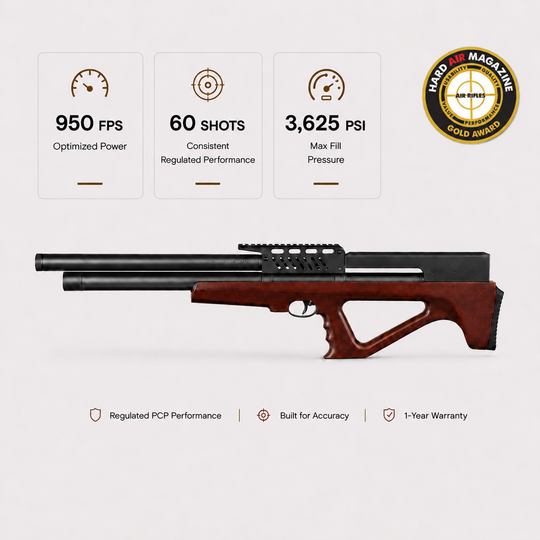
Budget for support gear. A hand pump is the cheapest option but is labor-intensive. A budget compressor costs more upfront but changes how often you shoot. A scope can be inexpensive, but it must hold zero. Pellets matter; a gun that shoots cheap pellets well is more valuable than one that needs premium ammo. Pinty rifles often appeal to shooters who want usable accuracy at 25–50 yards, not benchrest perfection. If that is your goal, spending $300 on a rifle and $150 on a scope and pump is better than $450 on a rifle and $50 on everything else.
Finally, ignore the “lifetime rifle” idea for a first PCP. Most shooters upgrade after a year. A first PCP should be reliable, safe, and easy to fill. It should teach you what you like. A company that offers a clear model ladder and listens to feedback is a better partner than one with a single “best” model. That is why Pinty’s current direction is worth watching. The answer to “how much should a first PCP cost” is not a number; it is a range that leaves room for air, optics, and pellets. Pinty’s budget-first lineup makes that range easier to hit.