

A brand ambassador is someone a company pays, in money, product, or commission, to represent it over months instead of for one post. The role splits three ways: event staff working shifts, employees who post about their own workplace, and creators with an audience. Pay runs from under $18 an hour to five figures a month, and that gap has a reason behind it.
The role at a glance
| Question | Short answer |
|---|---|
| Who hires them | Beverage and food brands, retailers, staffing agencies, apparel labels, colleges, software companies |
| Typical commitment | Three months to a year, renewed |
| How pay works | Hourly shift rate, monthly retainer, commission on a discount code, or product only |
| Federal wage data | $17.77 an hour median for demonstrators and product promoters (BLS, May 2023) |
| Tax status | W-2 for most agency shift work, 1099 for most creator deals |
| Legal duty | Disclose the relationship on every paid post, every time |
| Entry requirement | No degree; brands screen for fit, reliability, and a real audience |
Key takeaways
- One title covers three very different jobs, and they do not pay alike.
- Federal wage data puts field promoter work in the high teens per hour.
- Creator deals pay more but carry no benefits and no guaranteed hours.
- Writing “ambassador” in your bio is not a legal disclosure.
- Exclusivity, content usage rights, and termination notice decide whether a contract is fair.
What a brand ambassador is, in plain terms
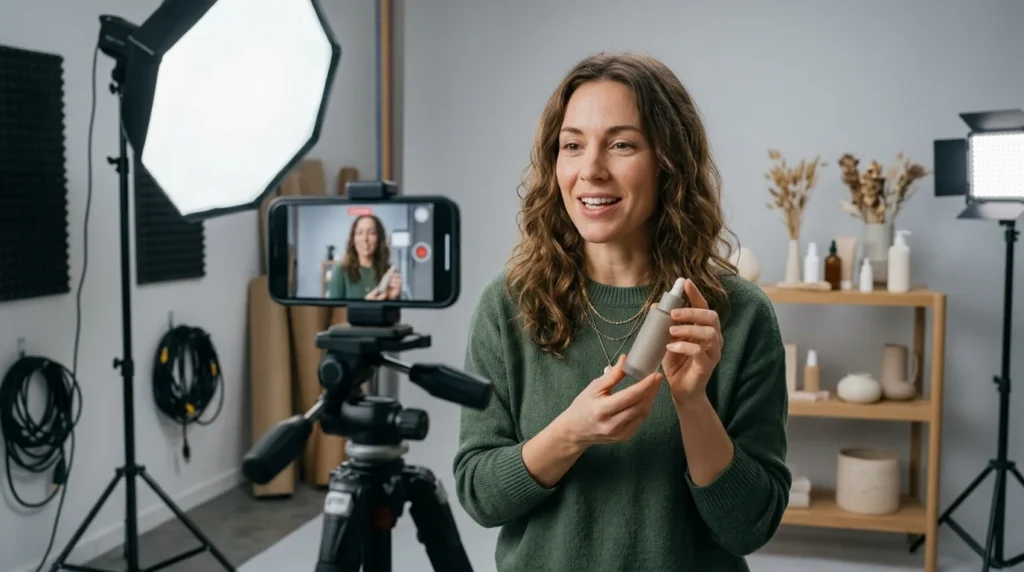
A brand ambassador is a person under an ongoing agreement to speak for a company in public, online, or in person, in exchange for pay, free product, or commission. The relationship is long-term and named. That is what separates it from a one-off sponsored post, where the brand buys a single piece of content and moves on.
Brands like the arrangement because repetition beats reach. Somebody who mentions the same coffee roaster for eight months reads as a customer with a habit. Somebody who mentions it once reads as an advertisement. That trust is the whole product, which is also why the same logic shows up in marketing strategies that build brand awareness across other channels.
Three types, three completely different paychecks
Most guides treat this as one job. It is three, and confusing them is how people end up disappointed by an offer.
| Type | What they do | How they get paid |
|---|---|---|
| Field or event ambassadors | Sample products in stores, at festivals, on campus; run demos and hand out product | Hourly, booked by a staffing agency, usually W-2 |
| Employee advocate | Posts about their employer, speaks at industry events, refers candidates | Salary, plus bonuses or referral fees; the advocacy sits inside the job |
| Creator ambassadors | Makes content on their own channels under a term contract | Monthly retainer, commission on a code, free product, or a mix; 1099 |
A college student pouring samples and a fitness creator on a twelve-month retainer both hold the same title. They share almost nothing else.
What the pay really looks like
Salary aggregators scrape job postings and blend all three types into one average, which is why you see numbers between $20,000 and $100,000 for the same job title. Federal data is narrower and firmer. The Bureau of Labor Statistics counted 50,790 demonstrators and product promoters in its May 2023 wage survey. That survey put the median at $17.77 an hour, or $36,970 a year, with the bottom tenth at $14.16 and the top tenth at $27.97.
That figure covers the field work. It does not cover creator deals, which are negotiated privately and swing wildly with audience size and category. A creator with 15,000 engaged followers in a narrow niche can hold a retainer worth more per month than a demo shift pays in three. That mirrors what small YouTube channels earn from sponsorships rather than ads.
Product-only offers deserve their own warning. Free goods are taxable income at fair market value, and they do not pay rent.
Ambassador, influencer, or affiliate?

| Role | Length | Paid for |
|---|---|---|
| Ambassadors | Months to years | The ongoing relationship and consistent presence |
| Influencer | One campaign, sometimes one post | Reach and content delivery |
| Affiliate | Open-ended, no commitment | Sales only, through a tracked link or code |
These roles overlap in practice. Plenty of these contracts include an affiliate code, so the retainer covers presence, and the code covers performance. Read which part of your pay is guaranteed before you sign anything.
The disclosure rule most people get wrong
This is the part where guessing costs you. If a brand pays you, gives you free product, or hands you a discount, that is a material connection and your audience has to be told. The Federal Trade Commission, in guidance last updated in December 2024, tells endorsers to avoid stand-alone terms such as “thanks” or “ambassador”. Its guidance puts the disclosure with the endorsement message itself, never on a profile page or behind a “more” link.
So a bio that reads “Acme Ambassador” does not cover a post about Acme. Plain wording does: “ad”, “sponsored”, or a sentence saying Acme sent you the product. The FTC also puts the duty on you, the endorser, and not on the brand’s legal team.
Three habits keep you clear:
- Put the disclosure in the caption’s first line, not after the fold.
- Say it out loud and on screen in video, and repeat it during a live stream.
- Disclose even for gifts you were never asked to mention.
Read the contract before you sign
These agreements are short, and the risky clauses hide in ordinary language. Four terms decide whether the deal is worth taking.
- Exclusivity. A category lock stops you from working with any competitor. That can be reasonable for one brand of running shoe and unreasonable when the category is written as “all athletic apparel and wellness”.
- Content usage rights. Brands often want to run your posts as paid ads. Perpetual, worldwide usage for free is a common ask and a fair thing to price separately.
- Termination notice. Look for how many days’ notice either side owes and whether you get paid for work already booked.
- Tax status. Agency shift work is usually W-2 with taxes withheld. Creator deals are usually 1099, which means you set aside your own taxes and cover self-employment tax on top.
If a clause is vague, ask for a number. Vague clauses get read in the brand’s favour later.
How to become one
- Pick five brands you already buy from and can talk about without a script.
- Check each brand’s site for an ambassador page or application form, and search staffing agencies for local fieldwork.
- Post about those products for a month before you ask, so your account shows genuine use.
- Write a one-page pitch: who your audience is, what they buy, what you would make, what you want in return.
- Send it to the brand’s marketing or community contact, not the general inbox.
- Ask for the contract in writing, then check the four terms above.
Reliability wins these roles more often than follower count. Agencies rebook the person who shows up early and files the shift report.
If you are the brand: running a program that works

Recruit from your customer list first. People who already pay you convert far better than strangers with bigger audiences, and they cost less. Then measure something real. Engagement rate tells you nothing you can bank.
Track code redemptions per ambassador, revenue per dollar of retainer, new customers who name them at checkout, and how many finish their term without going quiet. Those four numbers tell you who to renew. Programs work best when they start alongside a launch, so pair recruitment with planning a product launch rather than bolting it on afterward.
One more thing brands forget: write the disclosure requirement into the contract and give ambassadors approved wording. Their mistake becomes your enforcement problem.
Your next step
If you want the work, pick two brands this week, spend a month showing genuine use, then send a one-page pitch with your numbers in it. If you run a brand, pull your customer list and invite ten regulars into a three-month pilot with clear disclosure wording and a tracked code for each of them. Either way, get the terms in writing first.
Frequently asked questions
No. Field and campus roles hire on personality and availability. Creator programs increasingly favour small accounts with high trust, because a niche audience buys.
Field work is a real hourly job, often part-time and seasonal. Creator ambassadorships are contract income and rarely replace a salary on their own.
Clear speech, comfort with strangers, punctuality, basic content skills, and honest enthusiasm for the product. Most postings ask for a high school diploma and nothing more.
Yes, unless your contract’s exclusivity clause bars the category. Check before you accept the second offer.
Both happen. Ask which one before you commit, and remember that free product counts as taxable income at its market value.